
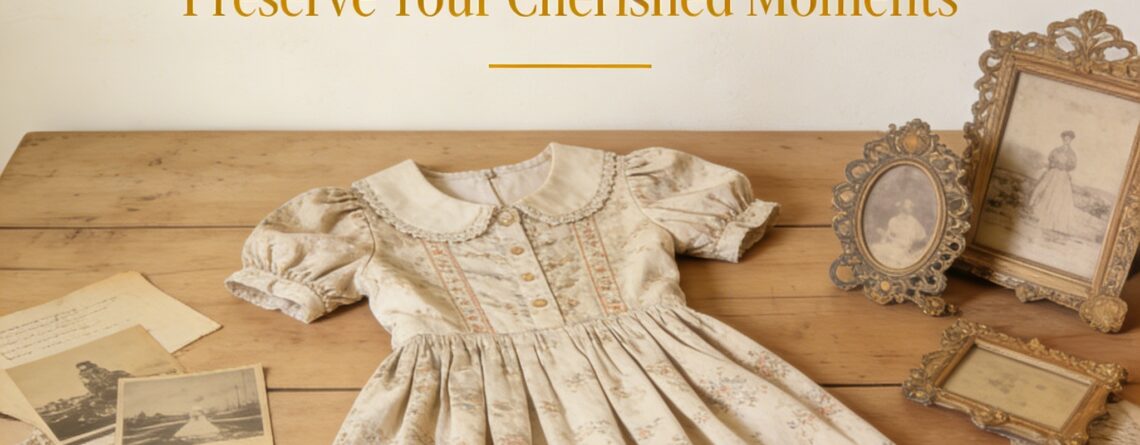
Fabric can act like a quiet time machine: a hem that remembers a first dance, a sleeve that still carries the scent of a newborn, a faded patch that maps the route of childhood adventures. Outfits we choose to keep are more than garments; they become tactile anchors to moments we want to revisit, tangible pages in a personal history book.
This article explores how to identify which pieces are worth saving and how to preserve them so those memories remain intact. We’ll look at practical conservation steps, thoughtful display and storage options, and creative ways to transform clothing into heirlooms that carry stories forward. Whether you’re considering a wedding dress, a baby’s coming-home outfit, a beloved costume, or a uniform that marks a milestone, the goal is the same: to keep memories alive in a form that can be shared and passed along.
Table of Contents
- The Story Behind the Stitches: Choosing Outfits That Deserve Forever
- Fabric Forensics and Care Instructions: Cleaning and Preparing Cotton, Silk, Wool, and Synthetics
- Storage Essentials for Lifelong Preservation: acid Free Materials Climate Control and Pest prevention
- Repair, Stabilization, and Professional Restoration: When to Mend at Home and When to Seek Experts
- Creative Display and Repurposing Ideas: Shadow Boxes , Quilts, and Heirloom Accessories
- Cataloging, Photographing, and Passing It On: Documenting Provenance and Care for Future Generations
- Q&A
- Concluding Remarks
The Story behind the Stitches: Choosing Outfits That Deserve Forever
Clothing can hold more than fabric—it holds moments. When deciding which pieces to keep, look beyond brand and trend and listen for the garment’s quiet cues: hand-stitched hems, an unusual button passed down from a relative, or the scent of a particular summer. Consider these simple touchstones as you decide what stays:
- Craftsmanship: Durable seams, quality fabric, thoughtful details.
- Memory: A first-dance skirt, a hand-me-down coat with a story.
- Potential: Can it be repaired, repurposed, or displayed?
Choose pieces that speak in specifics; they’ll translate into clearer keepsakes later.
Preservation is an act of intention. A few swift practices keep treasured garments vivid for years: gentle cleaning, careful mending, and proper storage away from light and moisture. The table below gives a tiny care checklist to pair with different reasons to save an item, useful when you’re sorting a closet into “keep,” “repair,” and “memory projects.”
| Why Save It? | Quick Care |
|---|---|
| Heirloom piece | Steam, acid-free tissue, box storage |
| Sentimental outfit | Photograph, mend buttons, hang out of sunlight |
| Potential material | Wash gently, label, store flat |
Turn saved garments into stories you can touch. A small, curated selection—each with a caption or note—becomes a living archive. Creative ways to honor them include:
- Patchwork quilts that weave many memories into one blanket.
- Framed pieces or shadow boxes with fabric, buttons, and handwriting.
- Digitized albums pair photos of the outfit with its story for future generations.
By choosing thoughtfully and caring deliberately, you ensure the stitches carry those stories forward.
Fabric Forensics and Care Instructions: Cleaning and Preparing Cotton, Silk, Wool, and Synthetics
Become a textile detective before any cleaning: photograph provenance marks and special details, inspect seams and lining for weakness, and check colorfastness in an inconspicuous hem. Look for telltale signs — oil rings, perfume discoloration, rust, or mildew — and document them. Simple, safe steps help preserve memories:
- Vacuum gently through a soft brush on low suction to lift surface dust.
- Spot-test any cleaning solution on a hidden seam and wait 15 minutes to watch for bleeding or damage.
- Note odors (mildew vs. smoke) — some require professional treatment rather than home washing.
If fibres are unknown or the garment is heavily stained, err on the side of conservator advice rather than aggressive home remedies.
When preparing keepsake outfits, follow fabric-forward care:
- Cotton — cold, gentle wash or handwash, reshape and air-dry flat; iron on medium with a press cloth for crisp details.
- Silk — best dry-cleaned; if handwashing, use cool water, silk detergent, never wring, and dry flat away from direct sun.
- Wool — vacuum and steam for light refresh; handwash with wool soap or dry-clean for heirlooms; reshape damp and dry flat.
- Synthetics — mild detergents, low-heat drying or air-dry; avoid high heat,t which can set stains or melt trims.
| Fabric | Quick Tip | Storage Note |
|---|---|---|
| Cotton | Wash cool, press gently | Acid-free tissue, breathable box |
| Silk | Dry-clean or handwash cold | Wrap in muslin, avoid light |
| Wool | Steam or gentle wash | Cedar or lavender sachet to deter pests |
| Synthetics | Cool wash, low heat | Folded, away from heat sources |
Storage Essentials for Lifelong Preservation: Acid-Free Materials, Climate Control, and Pest Prevention
Preserve the story stitched into each garment by starting with truly archival supplies: use acid-free, lignin-free tissue to pad folds and prevent color migration, and pack pieces inside breathable archival boxes or cotton muslin bags rather than ordinary plastic. For delicate trims and beading, wrap sections individually in tissue and cushion with gentle padding so seams and embellishments don’t rub or crease. Helpful essentials include:
- Acid-free tissue paper (unbuffered for protein fibers like silk and wool)
- Archival boxes with lids — avoid PVC and standard plastic that off-gasses
- Soft cotton muslin bags or padded supports for delicate silhouettes
- Silk-free, padded hangers only for structurally sound garments
Keeping fabric stable is as significant as using the right materials. Aim for a cool, consistently dry space away from direct light and temperature swings; rapid changes invite brittleness and mold. The quick reference below helps you choose the right environment and storage approach for lifelong preservation:
| Condition | Ideal Range / Tip |
|---|---|
| Temperature | 15–21°C (60–70°F) — stable, interior location |
| Relative Humidity | 40–50% — Use silica packets for control |
| light | Low to none — store in closed boxes or dark closets |
| Storage Spot | Interior closet or cabinet — avoid attics/basements |
Pest prevention keeps your keepsakes intact: store items in sealed archival boxes, avoid natural-scented mothballs and harsh chemicals, and consider natural deterrents like lavender sachets used with care (test first to avoid staining). Make it a habit to inspect regularly—quarterly or at least yearly—and if you find active insects, isolate the affected piece and freeze it sealed for 72 hours to halt larvae safely. Other practical steps:
- Clean garments before storage—stains attract pests
- Use sealed containers or tightly lidded archival boxes
- Keep textiles off the floor and away from walls to reduce humidity and pest access
Repair Stabilization and Professional Restoration: When to Mend at Home and When to Seek Experts
Knowing which treasures you can faithfully mend at the kitchen table and which require a conservator’s steady hands keeps memories intact without adding damage. For small fixes—loose buttons, tiny seam splits, a runaway hem—basic stabilization techniques are frequently enough: work with clean hands, use fine needles and matching thread, and support fragile fabric with lightweight interfacing or acid-free tissue while you stitch. Above all, handle gently and document the original condition with photos before you start, so future caretakers know what you changed.
- Inspect & document: Photograph stains, labels, and weak areas before any intervention.
- Stabilize, don’t reinvent: Reinforce tears with fine hand-stitches or a sheer patch on the wrong side.
- Use archival supplies: Cotton thread, acid-free tissue, and mildew-free storage are allies.
- When in doubt, pause: No glue, no aggressive machine washing, and no high-heat ironing on delicate trims.
Some problems signal it’s time to call a professional: pervasive stains, structural losses, historic fabrics, or mold and odor—these require specialized cleaning, reweaving, or stabilization that can only be done with conservation-grade materials. A textile conservator can perform gentle wet-cleaning, reweave lace or beading, and create custom archival boxes to halt deterioration. The quick reference table below helps you decide at a glance.
| Condition | Recommended Action |
|---|---|
| Loose button / small hem | DIY stabilization with fine hand-sewing |
| Large seam failure / lost lining | Professional restorer (structural repair) |
| Set-in stains or prints are fading | Conservator assessment and specialized cleaning |
| Mold, insect damage, or historic garments | Seek expert conservation promptly |
Creative Display and Repurposing Ideas: Shadow Boxes , Quilts, and Heirloom Accessories
Soft fabrics and tiny buttons carry stories you can hold — a cuff from a first concert shirt, a lace sleeve from a wedding dress, the faded patch of a childhood jacket. Encasing these pieces in a glass-fronted shadow box transforms a worn outfit into a quiet portrait, while stitching scraps into a memory quilt lets every seam whisper its own anecdote. For a subtler heirloom, consider turning hems into charm bracelets or brooches: a small swatch framed in metal becomes a wearable archive of a remarkable day. Preservation and intent work hand in hand; choose acid-free backing, gentle stitching, and display locations away from direct sunlight to keep colors and textures true for generations.
Practical approaches can be both stunning and simple. Try these ideas to give each garment a second life:
- Shadow boxes with labels — include a photo and date for context.
- Memory quilts — mix clothing swatches with embroidery or handwritten tags.
- Heirloom accessories — convert collars, buttons, or lace into pendants and cufflinks.
- Miniatures and ornaments — tiny replicas for holiday displays that evoke annual nostalgia.
Small notes sewn into seams — a name, a date, a scent — can make each piece feel intentionally personal.
| piece | Best repurpose | Time |
|---|---|---|
| Baby gown | Shadow box with photo | 1–3 hours |
| Wedding veil | Quilt panel or pillow | 3–10 hours |
| Sports jersey | Framed display or tote | 1–4 hours |
Cataloging, Photographing, and Passing It On: Documenting Provenance and Care for Future Generations
Every treasured outfit deserves a visual story as carefully composed as the garment itself. Photograph in natural, diffuse light and capture multiple angles — full silhouette, close-ups of stitching or embellishment, and any labels or marks that speak to its history. Make a habit of saving the original files in high resolution and exporting a web-friendly JPEG for sharing. Alongside each image, record a simple set of metadata to turn a pretty photo into a lasting record: who wore it, when, where it came from, and a short note about why it matters.
To make those details useful for future caretakers, create a compact provenance card for every piece and tuck it into the storage container or attach a small, acid-free tag. Use a digital inventory too — a spreadsheet or archive entry with clear fields helps preserve context across generations. A quick reference table below outlines the essential fields to include when cataloging and caring for keepsake garments:
| Field | Example |
|---|---|
| Name / Owner | Grandma Rosa |
| Date / Occasion | June 1978 — Wedding |
| Fabric / Care | Silk — dry clean only |
| Provenance Note | Hand-stitched by a neighbor |
| photo Reference | IMG_2026_folderA |
When it comes time to pass an outfit on, leave more than the fabric: include the story. A brief handwritten note, a copy of the photos, and a packet with care instructions and recommended archival supplies will help the next guardian honor the piece. For practical steps, consider these small gestures that make a big difference:
- Label boxes with item name and date.
- Include a printed provenance card and digital backup (cloud link or USB).
- Pack with acid-free tissue and breathable containers, and add a tiny sachet to deter pests.
These touches turn a saved outfit into a living memory — an heirloom prepared to tell its story long after the day it was made.
Q&A
Q: What do you mean by “keepsake outfits”?
A: Keepsake outfits are garments kept for their emotional, historical, or aesthetic value rather than daily wear. They might be a wedding dress, a child’s first sweater, a military uniform, a costume from a pivotal performance, or any piece that marks a meaningful moment in life.
Q: How do I decide which outfits are worth saving forever?
A: Ask practical and emotional questions: Who wore it, and why was it important? Does it evoke a clear memory or story? Is there an heirloom or cultural value? Is the garment in repairable condition? If a piece consistently surfaces in family stories or sparks a strong response, it’s a good candidate.
Q: How should I clean a keepsake outfit before storing it?
A: Cleaning depends on the fabric and condition. Start by reading labels, but when in doubt—or with delicate fabrics, heavy beading, or antique garments—consult a professional textile conservator or a cleaner experienced with vintage clothing. Avoid harsh chemicals, bleach, or aggressive agitation. Light surface dusting with a soft brush can help if professional cleaning isn’t possible.
Q: What are the best long-term storage methods?
A: Store garments in a cool, dry, dark place with stable temperature and humidity. Use acid-free archival boxes and tissue paper to pad folds and support shapes. For gowns and heavier garments, consider storing flat or gently rolled to reduce stress on seams; for costumes that must hang, use wide padded hangers covered in cotton and protect with a breathable, unbleached cotton garment bag. Avoid sealed plastic for long-term storage, as it can trap moisture.
Q: Can I hang keepsake garments in a closet?
A: Short-term hanging is fine, but for long-term preservation, avoid ordinary closet storage that exposes items to light, dust fluctuations, moths, and variable humidity. If you must hang a garment, use a padded hanger and a breathable garment bag, and place it in a cool, dark area away from vents and exterior walls.
Q: What should I avoid when preserving fabrics?
A: Avoid direct sunlight, plastic bags, damp environments, mothballs (they can be toxic and leave residues), and storing near chemicals or food. Don’t use tape, rubber bands, plastic clips, or fabric adhesives directly on the textile. Avoid frequent handling and rough folding.
Q: How do I protect beading, sequins, or fragile embellishments?
A: Support heavy embellishments with acid-free tissue under and around them to reduce stress. If parts are loose, document their condition with photos and, if necessary, ask a conservator for stabilization rather than attempting glue or stitches you’re not trained to do. Displaying such pieces in a horizontal or padded frame can relieve weight on stitches.
Q: Are there creative ways to display keepsake outfits without damaging them?
A: Yes. Consider a shadow box or frame with UV-filtering glass for small pieces or significant swatches. For larger garments, use mannequins with custom padding to support the garment’s shape, or display only a protected section (a sleeve or bodice) rather than the whole item. Rotate items on display to limit light exposure.
Q: How can I repurpose a garment while preserving its memory?
A: Repurposing can honor an outfit while keeping the story alive: turn swatches into throw pillows, quilts, ornaments, fabric-covered journals, or jewelry (lockets or resin-encased buttons). Photograph the whole garment before altering it, and keep a small untouched swatch or a story card with provenance to maintain context.Q: Should I label and document keepsake outfits?
A: Absolutely. Attach a non-invasive label or keep a separate archival folder with date, names, the occasion, who owned it, where it came from, cleaning or repair notes, and high-resolution photos. Good documentation preserves provenance and makes handing the item down easier.
Q: When should I consult a professional conservator?
A: Consult a conservator for antique textiles, heirlooms with significant monetary or historical value, pieces with severe stains or pest damage, or items with complex constructions (heavy beading, fragile lace). Conservators can stabilize, clean, and advise on long-term preservation and display.
Q: How do I handle insect or mold damage?
A: If you suspect active insect infestation or mold, isolate the item from other textiles, wear gloves and a mask, and get professional advice. Some light pest residues can be frozen by professionals to kill insects, but mold can be hazardous and often requires specialized cleaning and stabilization.Q: Are there environmental conditions I should monitor?
A: Yes. Aim for a stable temperature around 60–70°F (15–21°C) and relative humidity of about 40–50% if possible. Avoid attics, basements, or garages where temperatures and humidity swing widely. Use a hygrometer for monitoring and a dehumidifier or humidifier as needed.
Q: How can I pass keepsake outfits down through generations?
A: Preserve condition and context: clean and store properly, document the story, include care instructions and provenance, and consider making a small “care kit” with a note from you. When passing items on, explain the emotional importance and any preservation steps already taken.
Q: What if I can’t keep everything — how do I honor memories without keeping the actual garment?
A: Create a memory bundle: high-quality photographs, fabric swatches, written stories, and small repurposed pieces like a patchwork square or ornament. Digitize the garment with multiple photos or a 3-D scan and store the images with your documentation. That was, the memory remains even if the whole garment isn’t preserved.
Q: Any final quick tips for creating keepsake memories with outfits?
A: Treat clothing as you would a fragile photograph—handle minimally and lovingly, document its story, and make preservation choices that match the item’s material and meaning. Sometimes the best keepsake is a carefully made fragment or a beautifully stored whole that can continue to tell a story for generations.
Concluding Remarks
Clothing can be more than fabric and thread; it can be a quiet ledger of who we were at particular moments in time. By curating a small collection of pieces that carry real meaning, storing them with basic care, and pairing each item with the story behind it, you turn garments into portable memories rather than forgotten clutter. Whether preserved whole, documented in photographs, or remade into something new, these outfits can continue to speak across years and generations. The choice of what to save is yours — a selective, intentional act that decides which stories move forward. The best keepsakes are the ones that feel worth returning to: simple to retrieve, easy to explain, and ready to remind you of the life those stitches witnessed.






Leave a Reply