
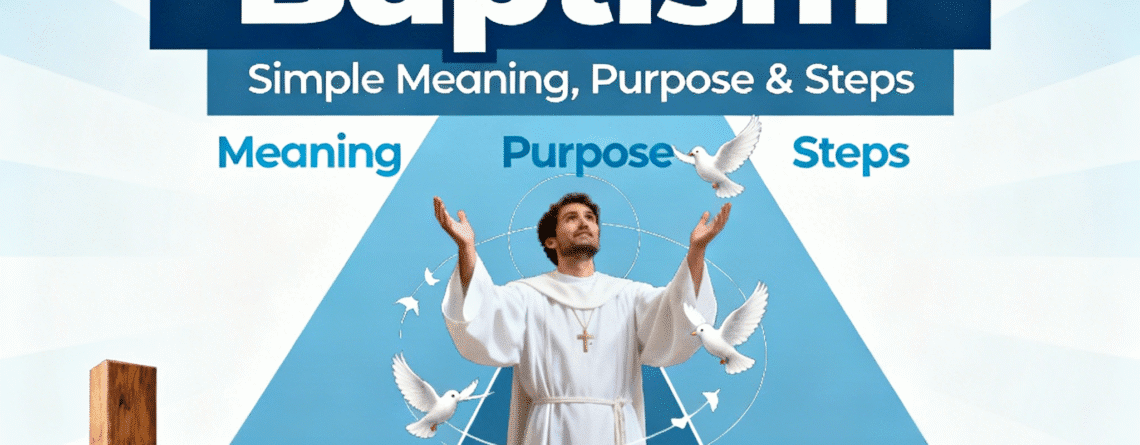
Imagine stepping into a quiet stream at dawn, the water cool against your feet, and feeling the moment mark a change – not because the water itself is magic, but because the act says something important about who you are and where you belong. That simple image captures the heart of baptism: a short, symbolic ritual that uses water to signal a beginning, a commitment, or a new identity.
At its core, baptism is a ceremony in many religions-most commonly Christianity, to welcome someone into a faith community. It can mean cleansing, a fresh start, public commitment, or being officially recognized as part of a group. how it looks and what people believe it does varies: some sprinkle water, some pour it, and some fully immerse a person; some do it for infants, others for adults. This article will explain baptism in plain language, cover the main ways it’s practiced, and outline the common meanings people attach to it. No dense theology, no jargon – just clear, simple explanations to help you understand what baptism is and why it matters to so many people.
Table of Contents
- What baptism means in plain words and how it touches everyday life
- Symbols, promises, and the deeper meanings behind the ritual
- How baptism is practiced across traditions and what each approach emphasizes
- Who should be baptized, and clear recommendations for parents and adults
- Practical steps to prepare, what to expect at the ceremony, and next steps afterward
- Q&A
- The Way Forward
What baptism means in plain words and how it touches everyday life
Baptism, in plain words, is a simple act that uses water to show a change in a person’s life: a symbolic washing away of the past and a visible step into something new. It marks a choice – publicly declaring belonging to a group of faith and accepting a set of values - and can be as gentle as a quiet sprinkle or as clear as immersion. In everyday terms, it is less about the water itself and more about the meaning it carries: a fresh start, a public welcome, and a reminder that life is lived in community.
That meaning moves into daily life in small, practical ways. People often carry the memory of baptism into how they relate to others, make decisions, and find comfort during hard times. Common, lived expressions include:
- Morning reminders - small rituals or prayers that echo the fresh-start idea.
- Belonging - feeling part of a community that offers support and accountability.
- Service – choosing acts of kindness as a way to live the commitment outwardly.
- Ethical choices – letting the symbolic new life influence everyday decisions.
| Symbol | Everyday reminder |
|---|---|
| Water | Clean start, breathe out what weighs you down |
| Name spoken | You belong; someone remembers you |
| Community touch | Support that shapes daily choices |
Symbols, promises, and the deeper meanings behind the ritual
Baptism uses simple, everyday symbols to express big ideas: water for washing and new life, oil for being chosen or strengthened, a candle for light and guidance, and a white garment for a fresh start. These outward signs help people see what is happening on the inside turning point where someone is welcomed into a community and hopes to live differently. In plain terms, the ritual says, “You are cared for, forgiven, and given a chance to begin again.”
At the heart of the act are promises-words spoken by the person being baptized or by parents and godparents on their behalf, and commitments made by the community to support that person. The ceremony is both personal and social: it marks an inner change and ties the individual to a group that will help them grow. Simple elements to notice include:
- Water: cleansing and rebirth
- Words: naming and promise-making
- Community: witnesses who pledge support
| Symbol | What it means |
|---|---|
| Water | Cleansing, new life |
| Oil | Being chosen and strengthened |
| Candle | Guidance and hope |

How baptism is practiced across traditions and what each approach emphasizes
Across Christian communities, baptism looks different on the surface but frequently enough points to similar ideas: water, words, and a public change. Some traditions practice full immersion, where a person is dipped into water to symbolize dying to an old life and rising to a new one. Others use sprinkling or pouring-gentle, symbolic motions applied to babies or adults. Some churches anoint with oil or invite godparents to pledge support; others emphasize a loud, visible declaration of personal faith. Whether held in a cathedral font, a riverside, or a simple tub, the ritual marks belonging, cleansing, and a beginning.
- Eastern Orthodox: three-fold immersion, strong sacramental emphasis, entrance into the church family.
- Roman Catholic / Anglican / Lutheran: infant baptism common, water plus oil and vows, focus on covenant and grace.
- Baptist / Pentecostal / Evangelical: believer’s baptism by full immersion, emphasis on conscious faith and testimony.
- Quaker / Some Reform Groups: symbolic or no water rite, stress on inner conversion over outward ceremony.
Below is a simple snapshot of what different approaches commonly emphasize:
| Tradition | Primary Emphasis |
|---|---|
| Orthodox | Sacramental union with Christ |
| Catholic / Anglican | covenant membership & grace |
| Baptist / Pentecostal | Personal faith and public witness |
| Quaker / Unitarian | Inner transformation over ritual |
Who should be baptized, and clear recommendations for parents and adults
Baptism is a simple, powerful sign-water and words that mark a change in relationship. It is offered to infants whose parents want to welcome them into a faith community, to children who can grasp basic promises, and to adults who consciously choose this path. In practice, the decision rests on belief, intention, and community support: some traditions emphasize personal understanding, others emphasize family and covenant. What matters most is that the act is meaningful to those who receive it and those who promise to care for them.
For clear guidance, consider these practical steps before taking the next step:
- Parents: talk with your faith leader, explore what promises are being made on your child’s behalf, and prepare the home with simple stories and prayers.
- Older children: encourage questions, offer age‑appropriate teaching, and let them express willingness in their own words.
- Adults: reflect on personal faith, join a short preparation class or conversation, and choose a sponsor or mentor if helpful.
- All: prioritize community support-baptism is both a personal step and a communal welcome.
Speedy reference:
| Stage | Focus | Typical First Step |
|---|---|---|
| Infant | Family covenant and blessing | Meet with clergy |
| Child | Understanding and affirmation | simple lessons + family promise |
| Adult | Personal commitment | Preparation class or mentorship |
Practical steps to prepare, what to expect at the ceremony, and next steps afterward
Before the day, focus on simple, practical things: choose pleasant clothing that can get wet, confirm who will stand as godparents, and bring any paperwork the church requested. Quiet preparation helps too – a short moment of reflection or conversation with the officiant will make expectations clear. Arrive early so you can meet volunteers, show children where to sit, and calm any nerves; this small courtesy keeps the ceremony gentle and unrushed.
- Clothing: light layers, a spare outfit
- Essentials: towel, certificate forms, camera or phone (if allowed)
- People: godparents, close family, one point person for logistics
- Timing: arrive 15-30 minutes early
The ceremony itself is usually brief and warm: expect a short reading or prayer, the central act of water – either sprinkling, pouring, or a symbolic immersion – and a blessing that welcomes the person into the community. There might potentially be hymns, a simple declaration of faith (spoken by the candidate or sponsors), and the signing of a register. Afterward, the congregation frequently offers congratulations, and there might potentially be a chance for photos or a small reception. Keep plans relaxed – most churches prefer intimate gatherings where the focus is on the meaning rather than the spectacle.
Afterwards, practical next steps include receiving the official certificate, connecting with a local faith group or class if you want to learn more, and perhaps organizing a small celebration. Many parishes will offer follow-up meetings or baptism classes; consider them a good way to stay involved and ask questions. Below is a quick checklist of common follow-ups many families find helpful.
| When | Typical next step |
|---|---|
| Within 48 hours | Collect certificate; send thank-you notes |
| Within a month | Attend a welcome meeting or introductory class |
| Ongoing | Join community events; plan regular check-ins |

Q&A
Q: What is baptism in simple terms?
A: Baptism is a religious ritual that uses water to mark a person’s entry into the Christian community. It’s a symbolic act many Christians use to show cleansing, new life, and belonging.
Q: Why do people get baptized?
A: People get baptized for several reasons: to follow Jesus’ example, to show they believe, to be welcomed into a church family, or, as their tradition teaches, it’s critically important for spiritual reasons.
Q: What does the water mean?
A: Water usually symbolizes washing away the old life and starting fresh. It can also represent dying to old ways and rising to a new life, frequently enough pictured as going under and coming up again.
Q: Is baptism the same in every church?
A: No. Churches differ on how they do it (immersion, pouring, or sprinkling), who is baptized (infants or people who are old enough to decide), and what baptism means for salvation or membership.
Q: What are the common ways baptism happens?
A: – Immersion: the person goes fully under the water.
– Pouring (affusion): water is poured over the head.
– Sprinkling (aspersion): water is sprinkled on the person.
All three are accepted by different groups.
Q: Who can baptize someone?
A: Often, a pastor, priest, or minister performs the ceremony. In some traditions, laypeople can do it. In emergencies, many churches accept that anyone can baptize if they use water and the customary words and intend to do what the church does.
Q: Can babies be baptized?
A: Some churches baptize infants to welcome them into the faith community and express a parent/godparent promise to raise the child in the faith. Other churches wait until a person is old enough to say they believe (called “believer’s baptism”).
Q: Is baptism required to be a Christian?
A: Christians disagree. Some traditions teach that baptism is necessary for salvation; others see it as an important public sign of faith but not the only thing that saves a person. Many agree it’s an important step in a believer’s life.
Q: Does baptism save you from sin?
A: Different churches answer this differently. Some teach that baptism conveys God’s grace and forgiveness. Others teach that salvation comes through faith, and baptism is a public expression of that faith. The answer depends on one’s religious tradition.
Q: What are godparents for?
A: Godparents (or sponsors) are people chosen to support the baptized person’s spiritual life and help raise them in the faith. This is common when infants are baptized.
Q: Does it hurt?
A: Generally, no. Baptism is a gentle ritual. Immersion is brief, and pouring or sprinkling is not painful. Parents and leaders usually take care to make it safe and respectful.
Q: Can you be baptized more than once?
A: Many churches baptize only once because it’s seen as a one-time initiation. Some groups allow rebaptism if someone changes traditions or feels their first baptism didn’t match their beliefs.
Q: Is baptism only a Christian thing?
A: Baptism, as a specifically Christian sacrament, is a Christian practice. Other religions have their own cleansing or initiation rituals (for example, the Jewish mikveh), but they are different in meaning and form.
Q: What should someone wear to a baptism?
A: Clothing depends on the method-people often wear a white garment or clothes they don’t mind getting wet. Churches usually give guidance ahead of time.
Q: How can I learn more or get baptized?
A: Talk to a local church or faith leader. They can explain their beliefs, show you what happens in the ceremony, and tell you how to prepare.
Q: What’s a simple way to think about baptism?
A: Think of baptism like stepping through a doorway into a new life and a new community-using water as a symbol of washing away the past and starting fresh.
The Way Forward
Baptism, simply put, is a water-based ritual people use to mark a new beginning, a belonging, or a public expression of faith. Different traditions give it different meanings-cleansing, welcoming into a community, or a sign of commitment. At its heart, it’s a symbolic act that names something important in a person’s life. Like stepping through a doorway or dropping a pebble into still water, baptism points to change and connection. Whether you see it as a personal milestone, a family celebration, or a spiritual sign, understanding the basics helps you appreciate why it matters to so many.
If you’re curious to learn more, talk with people from different traditions, read a bit of their history, or visit a local community and ask questions. That’s frequently enough the clearest way to see what baptism means in practice-and whether it might mean something to you.






Leave a Reply